


When we choose to do an MBA, the real gift we give ourselves is, in many ways, time. We step away from the job market to create space to breathe, reflect, and honestly review our career path so far. Of course, we gain knowledge, tools, and new perspectives. But beneath it all, the MBA’s rarest asset is time.
Not everyone notices this at first. But once you do, something clicks. The MBA stops being only a series of classes and deliverables, and becomes a once-in-a-while opportunity to recalibrate.
That’s when the real question comes up: How can I be fully present to get the most out of my year at IMD? How do I stop rushing ahead and start living in the moment?
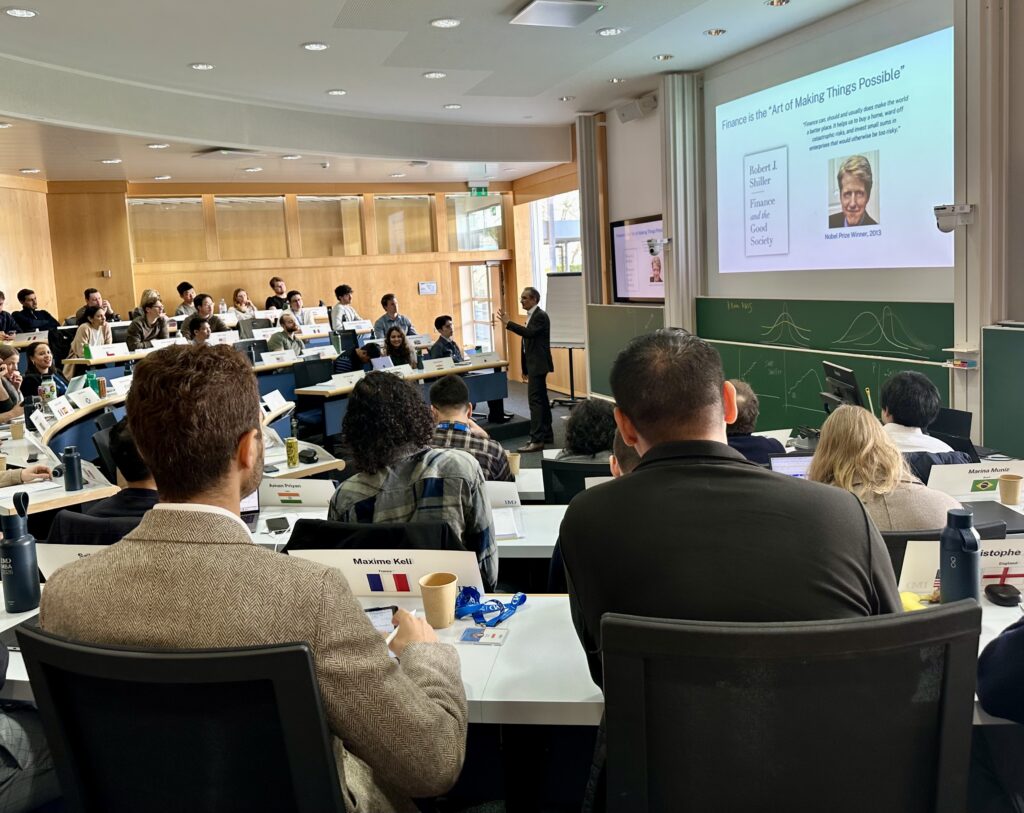
In fact, IMD made that expectation clear from Day 1. Francis, the MBA Director, asked us to put our phones away, and even close our laptops, so we could fully focus and be present. It was a simple request, but the signal is strong.
I’m still early in the journey, but one theme has already become impossible to ignore: the quality of this MBA will depend on how present I am for it.
This is less a lesson I have mastered than a discipline I’m learning, choosing presence over autopilot.
IMD’s intensity is a feature, not a bug
What strikes me about the IMD MBA program is that the intensity is intentional: the pace, the teamwork, and the constant engagement. It’s designed to accelerate growth through real responsibility and real feedback loops. The experience is rich by design. And when the experience is this rich, the key isn’t whether IMD offers enough. The key is whether I’m present enough to receive what it offers fully.
In different ways, Alyson Meister, Professor of Leadership and Dean of the MBA program, and Knut Haanaes, Professor of Strategy, have highlighted the importance of being in the PRESENT since the first week, and learning from every moment.
At IMD, learning doesn’t only come from what’s written on slides or case notes. A lot of it happens in the moments in between: a question from a classmate that makes you pause, a debate that exposes an assumption, a team interaction that reveals something about how you collaborate, influence, or handle tension.
For me, being present means intentionally absorbing those moments. Because when I’m not fully and intentionally present, I might still participate, contribute, and perform, yet miss the deeper lesson the moment is offering.

Presence as a leadership skill
That’s also why the Leadership module feels so connected to time. IMD doesn’t treat leadership as a topic to understand; it treats it as a capability to build through reflection, feedback, and practice. The module invites us to look at ourselves honestly: our behaviors, our default reactions, and how we want to show up to the world.
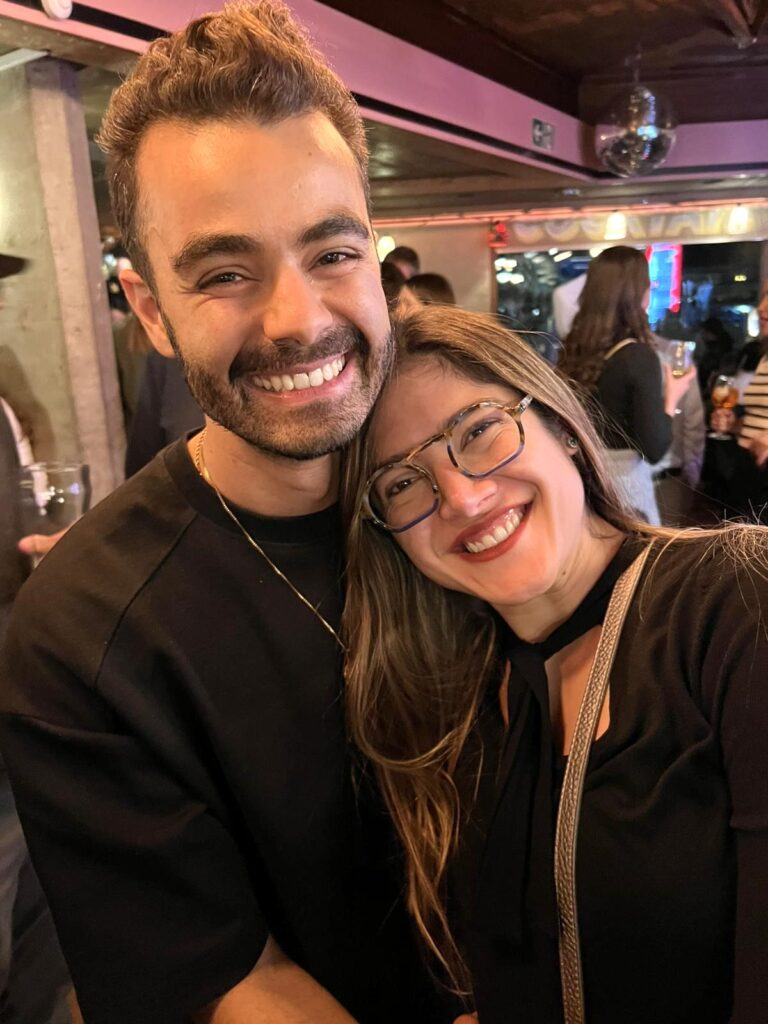
This kind of learning happens in real time. It’s in group exercises, discussions, and team moments, especially when there is pressure, ambiguity, or disagreement. Those situations reveal something valuable: how quickly we can fall back on habits and assumptions, and how much better our choices become when we slow down just enough to notice what’s happening in us and around us.
Presence is what creates that space: the space between stimulus and response. The space where we can choose curiosity over certainty, listening over rushing, and intention over reflex. In that sense, being present isn’t a “nice-to-have.” It’s a leadership skill.
Creating the conditions to receive the year
In a program like the IMD MBA, it’s tempting to tell ourselves we’ll be present “later”, after the next deadline, after the next deliverable, after things calm down. But presence doesn’t appear by accident. You create the conditions for it.
For me, that meant reducing the mental overhead that comes with a dense schedule, so that more of my attention could go to learning, people, and reflection. That’s what led me to build a simple support system: an IMD executive assistant AI agent. It turns a full week of commitments into a clear briefing: where to focus, what needs preparation, and when to recover. The most important outcome wasn’t efficiency. It was focus. And focus is what makes presence possible.
What I’m practicing (small habits that survive a busy calendar)
I’m learning that being present isn’t a personality trait. It’s a practice. And in the IMD MBA schedule, the practices that survive are the ones small enough to repeat:
- The two-minute landing: before class or a meeting, pause and ask: What matters in the next hour?
- Single-tasking as respect: one conversation, phone away.
- A weekly block for sense-making: What patterns am I seeing? What am I avoiding? How do I want to show up next week?
The IMD MBA gives you a lot: knowledge, tools, relationships, and new options. But beneath all of that sits something rarer: time, time to recalibrate, time to reflect, time to become more intentional about the leader, and the person, you want to be.
The catch is that time only becomes a gift if we’re present enough to receive it. And maybe that’s the paradox worth holding at IMD: in a program built for acceleration, presence might be the most strategic advantage of all.
