


Kabelo Themane has spent most of her career as the only woman in the room, and often the only person of color. She built that career in impact investing in South Africa, deploying capital into early-stage companies that mainstream investors tend to overlook, particularly those founded by women. By the time she arrived at IMD, she had led the deployment of more than four million dollars in early-stage impact investments, been named one of SAICA’s Top 35 Chartered Accountants under 35, and earned a reputation in a space that did not make any of it easy.
Kabelo came to IMD wanting three things: a global perspective, a global network, and a year to invest fully in herself. What she would do on the other side of it, she left deliberately open.
The tunnel vision problem
The decision to leave South Africa for a year came from a specific observation about what prolonged immersion in one context does to the way you see. She had watched it happen around her: smart, capable people who had seen more and more of the same until the world narrowed to what they already knew. She wanted the blinders off.
“When you’ve been in the same place for a long time, you begin to have tunnel vision on the possibilities and opportunities, as well as the problems. I needed to experience something different.”
That meant going outside her country, outside her network, outside the investing sphere where her relationships ran deep and her assumptions had never been seriously tested. IMD’s one-year format mattered. Two years felt like too long to be out of the market. A short course felt too shallow. One year was enough to go in fully and come back changed.
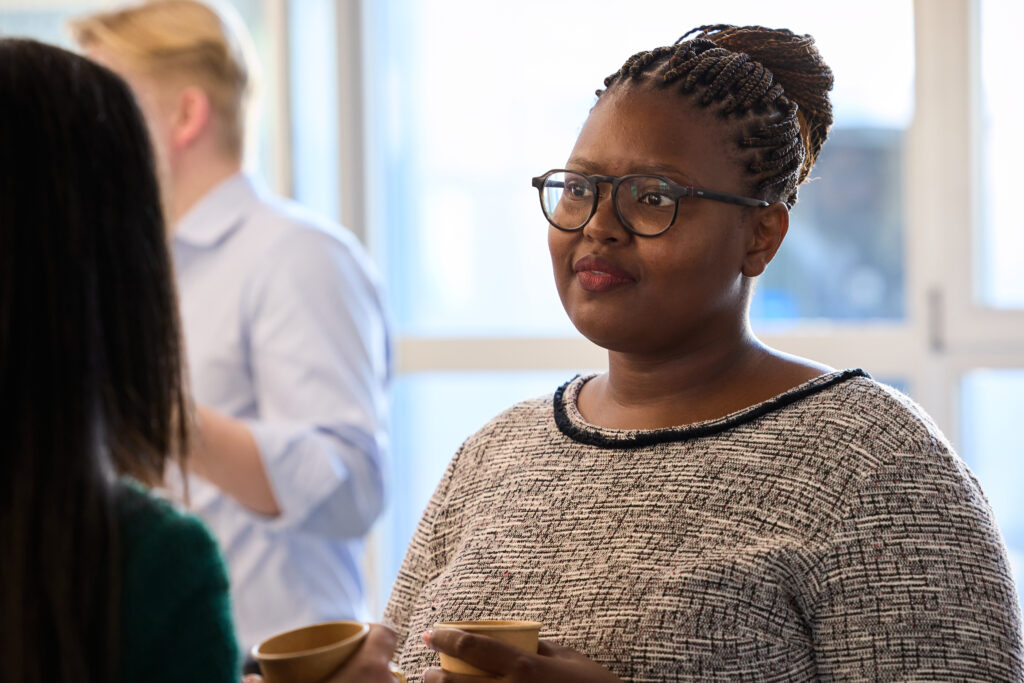
She spoke to everyone she could find who had done the program before she arrived. Every single one of them reached for the same word: transformative. It is, she will tell you, a word that business schools use so freely it has almost stopped meaning anything. What she found was that it was accurate. It just described something she had not expected.
What she didn’t expect
Kabelo came in open. No fixed expectations, no predetermined outcome, no plan for what she would do when she left. That openness turned out to be the right instinct for what the year actually required.
The program took her to Singapore for the Future Lab, where she engaged with how technology is reshaping business at the intersection of government and private sector. It sent her to Serbia and Turkey for the International Consulting Project, working with a multinational client on a real business problem under a seven-week deadline. It put her in a cohort of 34 nationalities and gave her conversations with classmates from Brazil, India, and Indonesia that reframed problems she had thought were specific to South Africa as shared ones.
“I leave knowing that across the world we are far more similar than we seem to think, particularly countries in the Global South. We face the same issues, the same structural and systemic barriers, and yet share a deep patriotism in how we can create solutions for the future.”
But the part of the program that surprised her most was the Personal Development component, which she had assumed would be peripheral to the real work of an MBA.
“I thought it was fluffy when we first started. I just thought, okay, we’re going to tap into the subconscious, cool, but this sounds a little bit fluffy.”
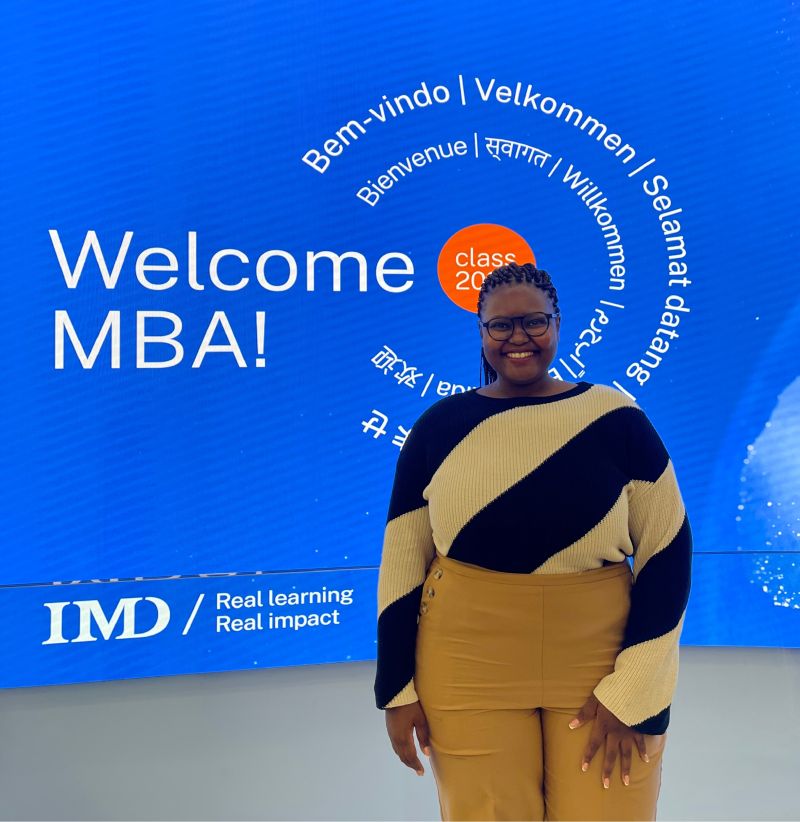
What it gave her was genuine self-knowledge, which turned out to be harder work than anything in the functional curriculum. Working with a personal coach and a psychoanalyst, both structured into the curriculum rather than offered as optional support, she spent the year learning how she actually led, not how she thought she did.
“What happened to you? What happened to us that makes us who we are? How do we navigate this world? How do we make sure we can be vulnerable, and yet still excel? Answering these questions has been hard, but incredibly rewarding.”
She also took an elective called Finding Your Calling, which turned out to be less about career planning and more about breathwork and grounding, another route into the same territory the PDE had been mapping all year. Two different methods pointing at the same conclusion: if you know yourself, you know what you can do. Her biggest accomplishment at IMD, she said, was leaning into the vulnerability that genuine self-awareness requires.
The compass, not the map
Kabelo came in with a feeling that she needed to do something different. A sense that maybe impact investing, the work she had given nearly a decade to, was not where she was supposed to stay. The MBA was partly a test of that feeling.
What she found when she widened the lens was that the work itself remained exactly right. What she needed was a broader platform from which to pursue the same direction.
“If I want tangible impact, what I was doing does that, and it’s measurable. It broadens the socioeconomic growth and livelihoods of people. I realized I loved it. A lot.”
The emerging markets focus that has defined her career is a conviction, not a constraint. She is a member of Jasiri Angels, a female angel investing group backing impactful companies built by women in Africa, and she describes the future of the Global South with the specificity of someone who has spent years deploying capital there, not observing it.
“The future is in the Global South. That’s where I need to invest, because bringing it up is a collaborative effort. You don’t do things alone.”
There is a word she grew up with for this worldview: Ubuntu. I am because we are. It was there before the MBA. The year deepened it and gave it new language.
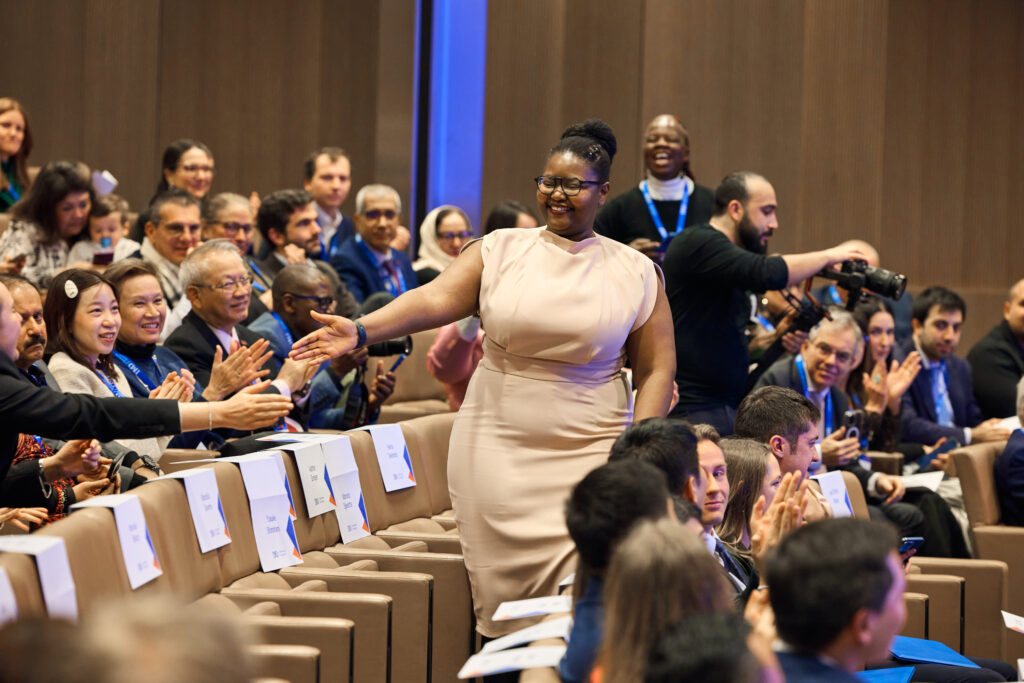
Kabelo graduated in December 2025 and is now providing impact investment advisory support to impact funds and mission-driven organizations focused on SDG-aligned SMEs, blended finance, and emerging markets. The thread from her career before IMD runs directly into what she is building now. What does not show up in a job title is what changed most.
She left with self-awareness and psychological safety as practical tools she intends to use in every room she walks into. She left with what she describes as a compass rather than a map.
“I know the compass is solid. The direction where it leads me, I don’t know, but I know the compass itself. I can trust where it will point me.”
“It is always about people. The people you serve as a leader, the people you motivate, the people who stand with you.”
That’s when the real question comes up: How can I be fully present to get the most out of my year at IMD? How do I stop rushing ahead and start living in the moment?
This is less a lesson I have mastered than a discipline I’m learning, choosing presence over autopilot.
Kabelo Themane graduated from IMD’s MBA program in December 2025 as the Women Leaders Scholar.
Considering your own MBA? Find out if IMD is the right fit. Learn more →
