


Ashton Songer Ferguson built her first company from nothing. In six years, she grew a documentary storytelling and brand strategy business to more than 175 clients, entirely through referrals and organic demand. She sold strategy, built creative direction, ran operations, and managed the client relationships herself. It was, by any measure, a real business.
It was also, she eventually understood, preparation for something bigger.
From there, she spent close to three years at a Denver brand strategy firm, working her way from intern to senior strategy analyst across healthcare, SaaS, and financial services clients. She moved on to lead research and innovation work at now what, then spent two years as a senior strategy consultant with a freelance collective, serving agencies and Fortune 500 clients across healthcare, financial services, and CPG. Across each role, she developed a sharp instinct for where brands go wrong and why. She was good at diagnosing problems and constructing the commercial story around a company’s real value. But the further she went, the more she felt a specific frustration settle in.
“By the time a problem got to me, I would sometimes feel like I was putting a marketing bandaid on a bigger business problem. I wanted to move more upstream.”
That phrase is a precise description of what Ashton came to IMD to do. Not to fix the surface. To get to the problem before it became one, and to have the tools, the language, and the standing to operate at that level.
Why now, and why with two kids
Ashton had been thinking about an MBA for years. What turned it from an idea into a decision was a convergence of things: a growing clarity about where she wanted to go professionally, a desire to move her family to Europe, and a conviction that ambitious women should not have to wait until their lives look more convenient. “Professional progress shouldn’t be limited by your gender, your family role, or any other factor.” she said.
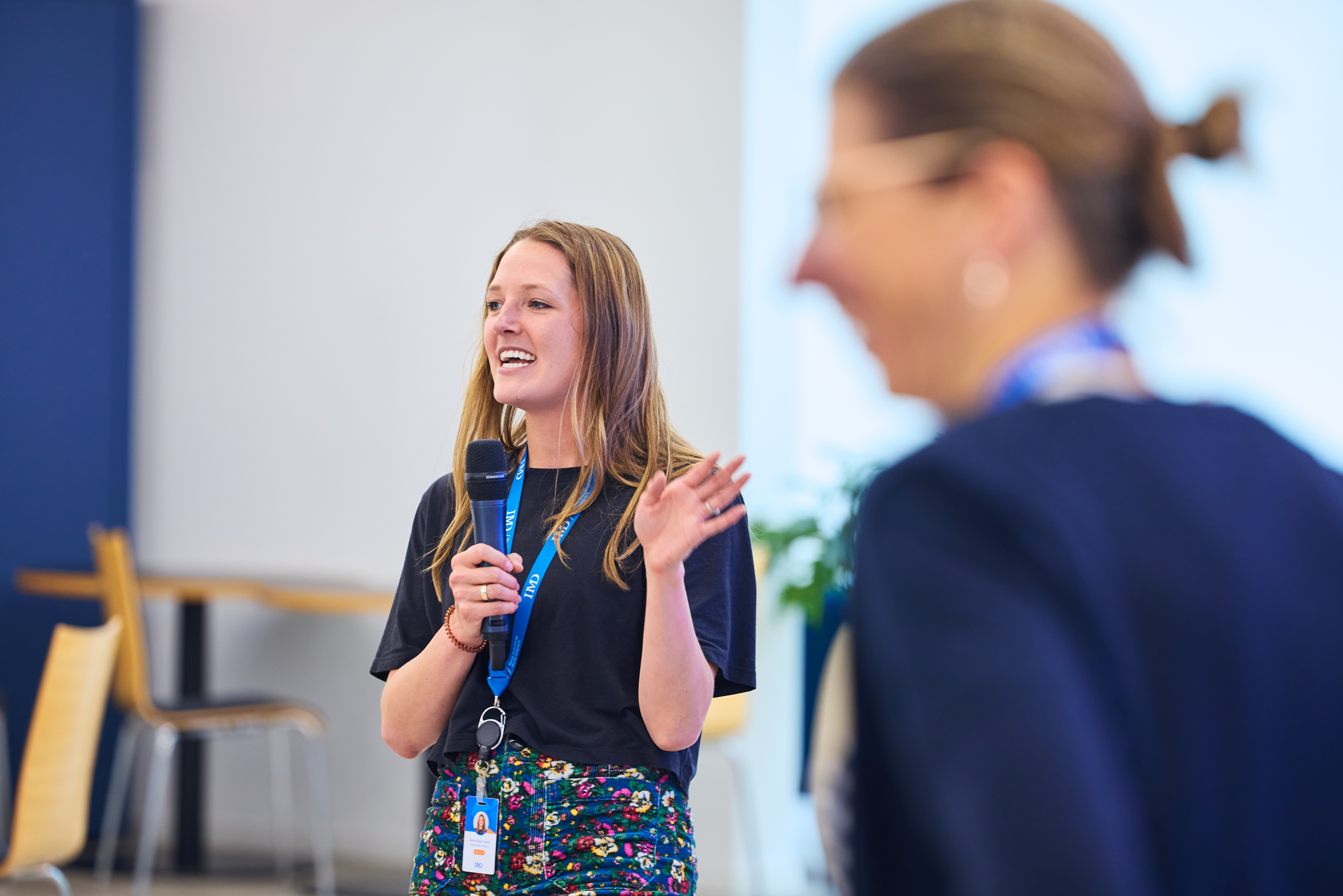
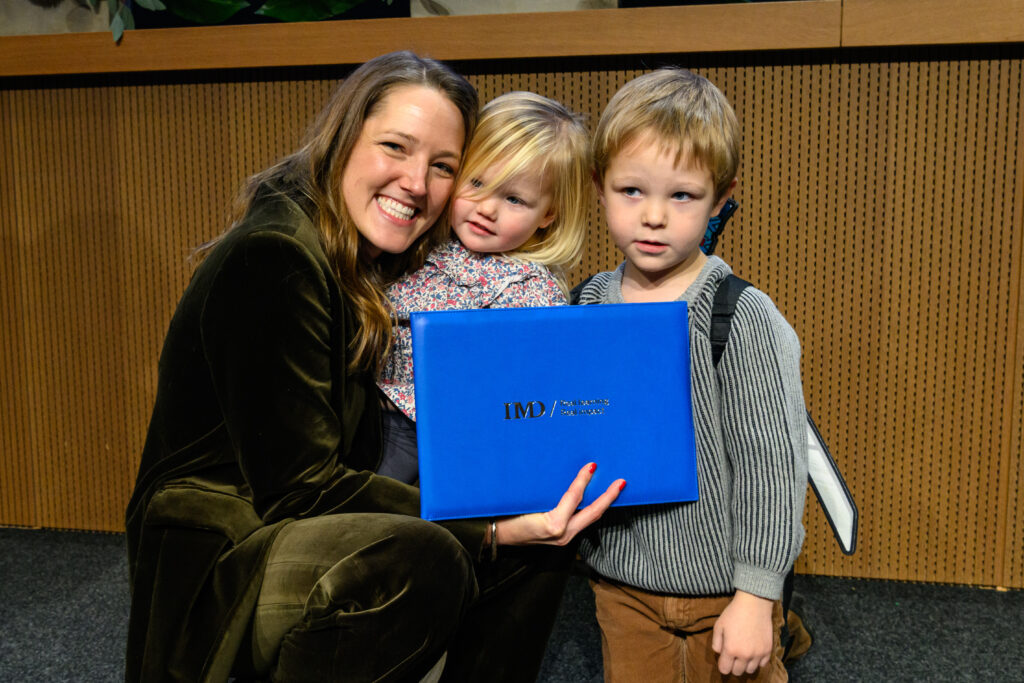
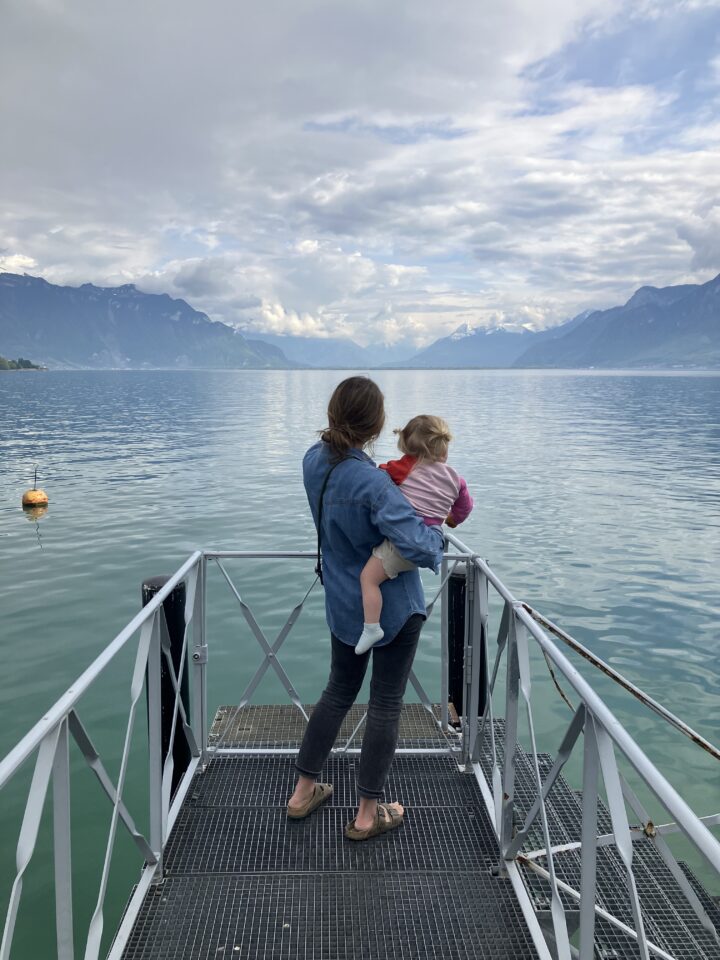
She brought her husband, her four-year-old, her two-year-old, and the dog to Lausanne. She applied knowing her post-MBA picture was not crystal clear and came anyway.
What followed was not easy. Coursework running until 1am. A toddler who chose the middle of the program’s most intense integrative exercise to stop sleeping through the night. She was in bed at 1:14am one night during that stretch. Her daughter started wailing at 1:15. She had to be at IMD early the next morning, ready to present.
She frames none of this as exceptional. Parenthood, she says, is itself a masterclass in the exact things the MBA demands.
“Sometimes I thought, ‘Am I in parenting sessions or leadership sessions?’ Turns out it’s both.”
With limited hours and zero margin, every decision had to be intentional. She learned to say no to the optional and commit to done over perfect, accepting lower grades when she chose her family, accepting trade-offs that hurt, and moving forward anyway.
“We have to get good at making choices, accepting the trade-offs, and moving forward. Sometimes we have to be willing to give some things up to make something better.”
What the year built
The leadership work asked Ashton to examine a gap she had not fully confronted before: the distance between her internal process and what the people around her could actually see.
Her instinct is to work toward a finished product that is sharp and considered, even when the path there looks chaotic from the outside. A feedback thread that ran through the year was about closing that gap. Learning to bring people along rather than arriving at the destination and turning around to find them still at the start.
“If it’s just you, you can work however you want. As soon as you bring in other people, you need to take them with you.”
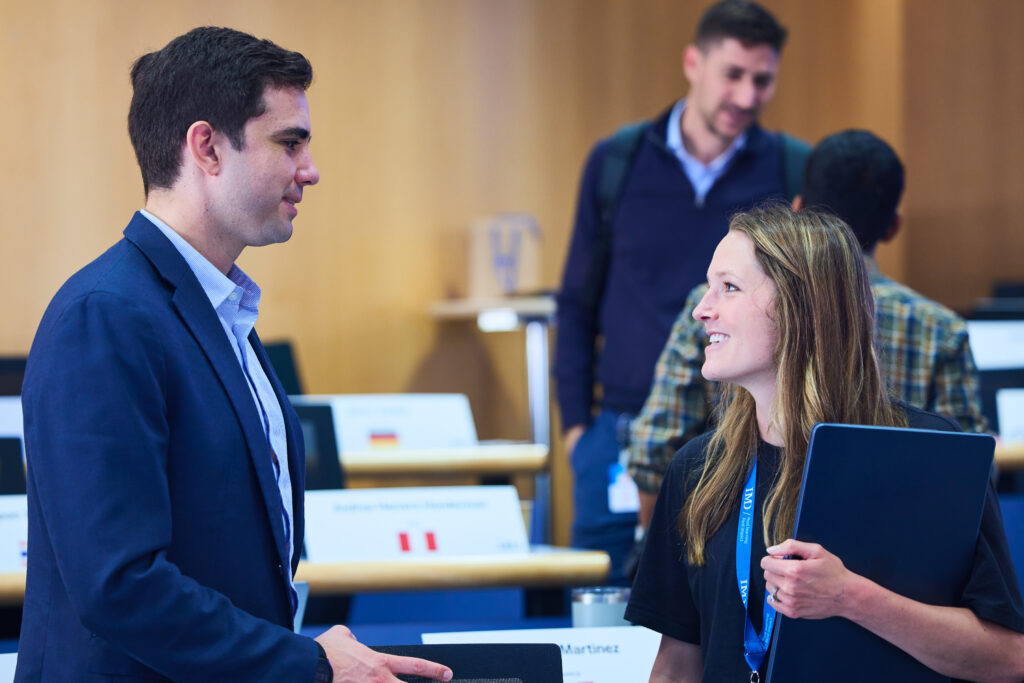
The class that shifted her thinking most was Jennifer Jordan‘s course on power and politics.
“The question I kept sitting with was: how do I keep being me, keep caring passionately about the things I care about, but use that constructively? In a way that actually achieves what I want to happen?”
It was less a shift in values than a shift in strategy. She arrived with energy, drive, and a fierce sense of what matters. She left with a sharper understanding of how to direct those things in a room full of other people.
That question about bringing people along didn’t stay confined to teamwork. It followed her into a bigger one: who gets brought along at all, and who gets left out of the room before the conversation even starts. Somewhere in the harder months of the year, she found a phrase she kept returning to on the days that felt impossible. She scribbled it at the top of her journal during a session on vocal leadership: build a more equitable world.
She means it specifically, not abstractly. As a working mother in an industry where senior women with children are still the exception, the gap she wanted to close had a face she recognized. That conviction found its clearest outlet in Singapore, where her Future Lab team built a prototype around a hands-free breast pump, addressing a women’s health need the market had consistently overlooked. They pitched it multiple times, fielded hard questions, iterated. It was the moment she says she really hit her stride.
“This sort of delusion and resilience is what’s required to change the world. It’s why I’m here.”
Where it leads
Toward the end of the year, Ashton shifted her focus. She had come in chasing what she calls the triple jump: changing geography, function, and industry at once. She came to understand that clarity means choosing what matters most and going there with everything you have. For her, it is geography, building her career in Europe, with her eyes on the Nordics.
A family summer in Denmark had already confirmed that direction. An ICP with a newly merged Danish biotech company, where she led customer segmentation and change management work, made it feel real. She was not ready to leave when it ended.
A VC simulation late in the year confirmed something else: the investing world, specifically early-stage companies where brand, commercial strategy, and growth infrastructure are still being built from scratch, is where she is pointed.
Ashton graduated in December 2025. The next chapter is in motion.
“Maybe the MBA degree journey is complete,” she says. “But what we’ve actually done is opened a new door and gone down a new path.”
Considering your own MBA? Find out if IMD is the right fit. Learn more →
