


Avid MBA blog readers and LinkedIn scourerers would have noticed that IMD candidates and staff have top profile photos. A photoshoot with Antoine Maraval, the hero behind our portraits, is a rite of passage for all MBAs at the beginning of the year. Besides his role at IMD, Antoine was the Creative Director and Co-Founder of a digital media production company, having worked with commercial brands and professional models. With a background in hospitality, he embodies a humanistic approach, enthusiasm to learn from interactions, and a creative spirit of building something from nothing.
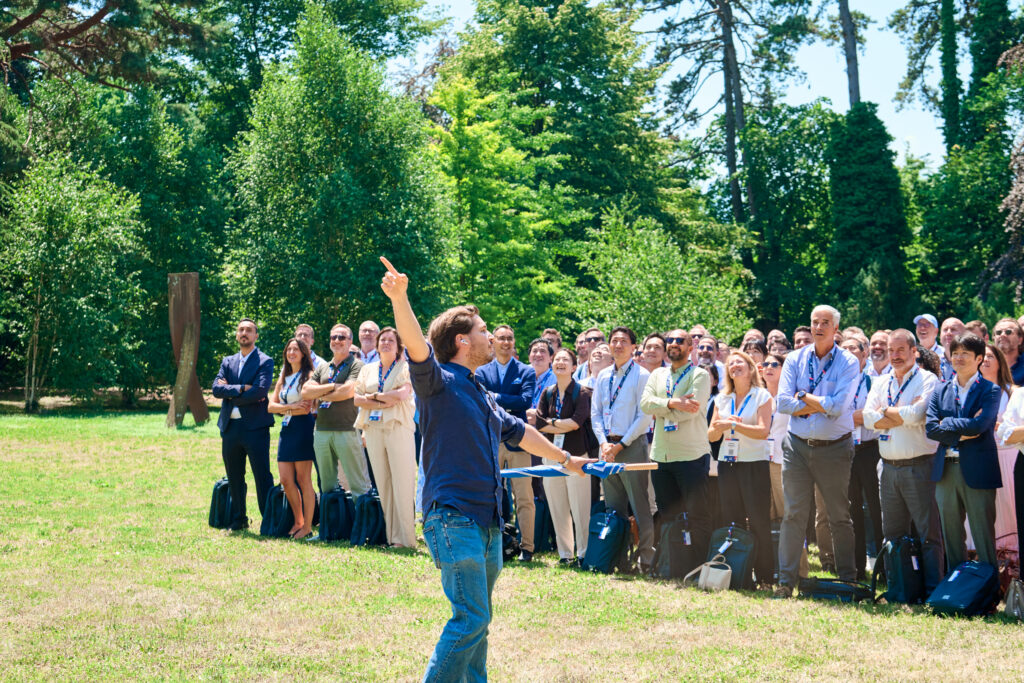
In the first months of lectures, experiential labs, club and committee responsibilities, coaching, group work, and PDE (Personal Development Elective), the thread of leadership from self-awareness underlines IMD’s pedagogy as more than a professional development pathway, but an environment tailored for personal growth. What a privilege and moment in life it is, to receive the resources to rediscover reexamine and reassemble my identity, awareness and confidence, making sense of past patterns, current tendencies, to guide future decisions.
It is a confronting process, and at times confusing: “Who am I, besides what I do?”
Centring on these themes, I thought to exchange with Antoine, whom has been well exposed to individuals and contexts that demand such emphasis and alignment. With the plethora of group work we have had, where voice could often be mistaken as contribution, we also reflected on how to empower, and be empowered.
“Knowing our place”
Sharing his experience working on production sets, it is a unique environment where seldom does someone come in with a “know-it-all” mentality that “they know better”, nor does everyone necessarily have a “voice”, or must speak to contribute. However, despite a conglomeration of different specialised individuals that might not have known one another prior, it can almost resemble a sacred space where individuals know their roles and can contribute well. “Knowing our place” is an important facet of self-awareness. It is certainly not about a repression of expression, but a recognition that individual(‘s) contribution can be in any form, unique to you.
Coming into business school from an artistic and technical background in architecture R&D, I was honourably surprised to have been voted as the co-ombud of the 2026 class. Shocked with an imposter syndrome, from being an outlier with no means to represent the professional background of the class and institution, I genuinely wondered why I was chosen by the people, for the people in this position.
In the first weeks, I doubted myself, puzzling over how I should become “more like the class”. Nevertheless, learning to grow by sharing my inhibiting vulnerabilities to those around, I have since been reminded by members of the cohort that they had selected me to be in this role, rather than seeing this role to define me. “Knowing my place”, is thus “knowing who I am beyond the role I play”, trusting what I can uniquely offer: an open and relatable character, proficient in collective sense-making, a duty of responsibility, with the vision to enable the cohort to feel confident and safe to express what is important and who we are.
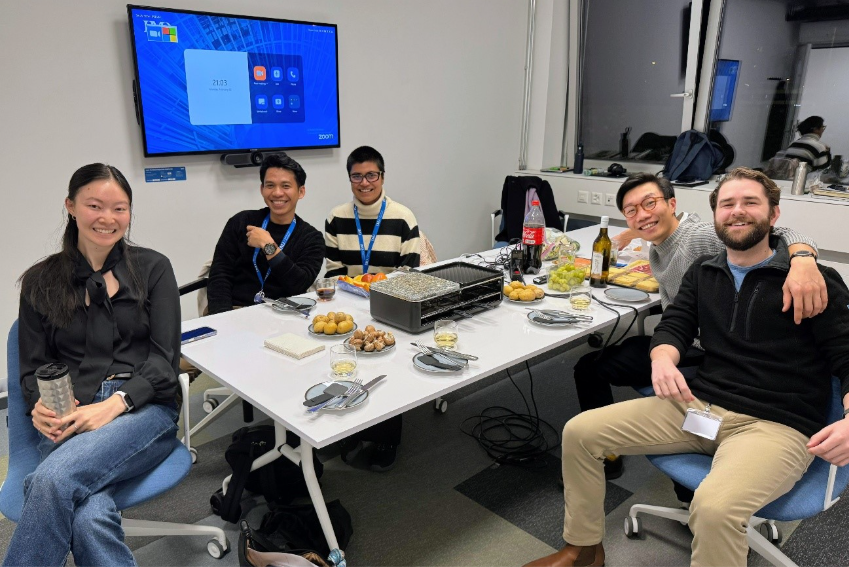
“Reflection vs. impression”
“How does shooting portraits of us compare with professional models?” I cheekily asked. In anecdotes, Antoine explained how models are generally more accurate in knowing how they appear and the image they can achieve, more effective in guiding towards a result that meets expectations. No surprise, but how is that the case? Given we all have stories where we have taken proud photos we truly believe showed the charm of our partners, friends and family, to only be met with shocking reactions of “Delete that! That’s not me!”
Perhaps a more accurate self-esteem comes from how often one receives external feedback. In professional modelling, every shoot review is such a process of how others perceived you. Hence, it would translate to how models tend to be more at ease to bridge the gap between expectation and reality from repeated external verification. Whereas common people like us MBAs would generally have formed our self-image through reflections from a mirror or a selfie, reinforced by how we see ourselves than through the lens of others. Impressions from portraits and photographs of us, a candid unscripted perception, may appear more unfamiliar but are in fact not less real. Going beyond physical appearance, aligning how we think we are, and how we are perceived, requires proactive discovery.
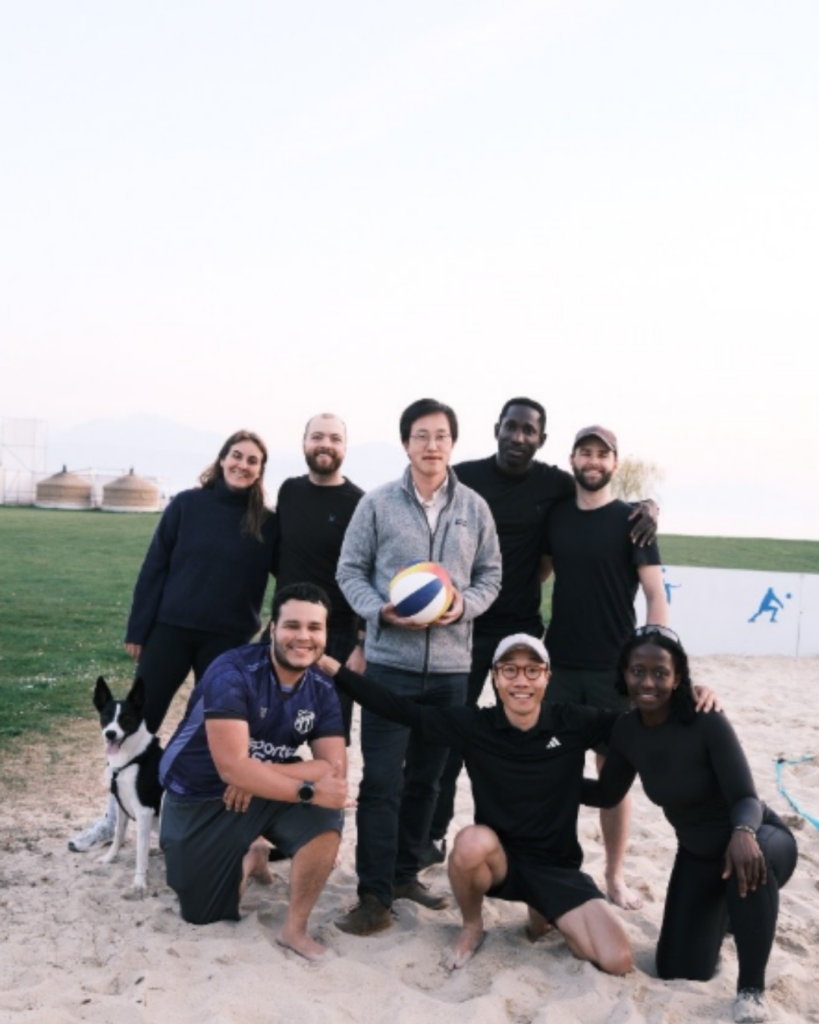
To my discomfort, from multiple occasions past and present, I have noticed a pattern to have been greeted by peers as “my captain”, “my president”. “Come on! Call me Arthur!” I always reply in disdain. To me, perhaps these terms carry a connotation of authority or hierarchy I somehow refrain from. As well-meaning as those that expressed their image of me, it leads to moments of self-reflection of whether my behaviour aligns with my impact, or if self-perception of concepts and connotations create false projections, and if my avoidance would demoralise if not disrespect others’ genuine opinion? In these instances, asking for feedback to verify our assumptions is essential.
One can’t learn about ourselves by ourselves.
“To do. To be. To feel.”
Be vulnerable, be curious, be fearless, the confidence in becoming more self-aware. That is also the spirit I carried over to hitting the ski slopes the first times of my life.
On the third occasion, I successfully tackled red slopes having been instructed and guided by talented friends in the cohort, I felt a wave of positive energy – But was I prouder of the fact that I achieved this steep learning curve (no pun intended)? Or more relieved that I no longer had to be accommodated by others for my inexperience?
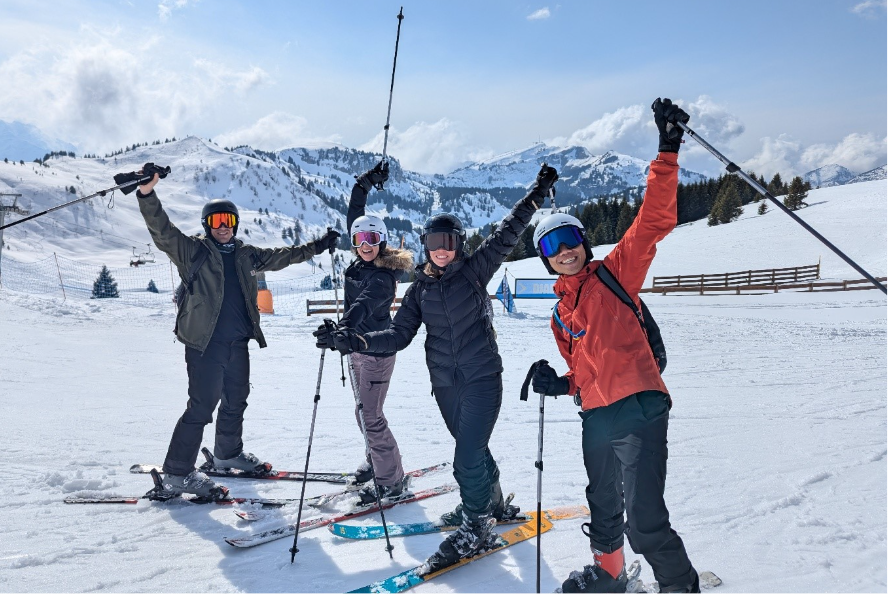
How we feel is reciprocal to how we are. At a professional juncture, lots of planning goes into what we want to “do”, it is as essential to understand who we want to “be”, and the environment at IMD has allowed us to explore further how we want to “feel”.
Thank you to Antoine for sharing his wealth of observations and anecdotes, and our reflective discussion on this topic.
In the discomfort of breaking ourselves into different pieces, also comes with the reward to reassembling ourselves with more clarity again.
Linking who we are, to what we do. What is, inspiring what could be.
Arthur Wong is part of our 2026 MBA class.
Considering your own MBA? Find out if IMD is the right fit. Learn more →
